London Searcher is a digital collection of objects, materials and (occasionally) structures found on the Thames foreshore by a licensed mudlark.
The name is a nod to the customs officers or ‘searchers’ appointed from the late 13th century to examine goods for import or export at the Custom House.
Who is behind it?
My name is Tom Chivers. I have been exploring hidden landscapes and their histories for as long as I can remember and a few years ago I wrote a book about the subject.
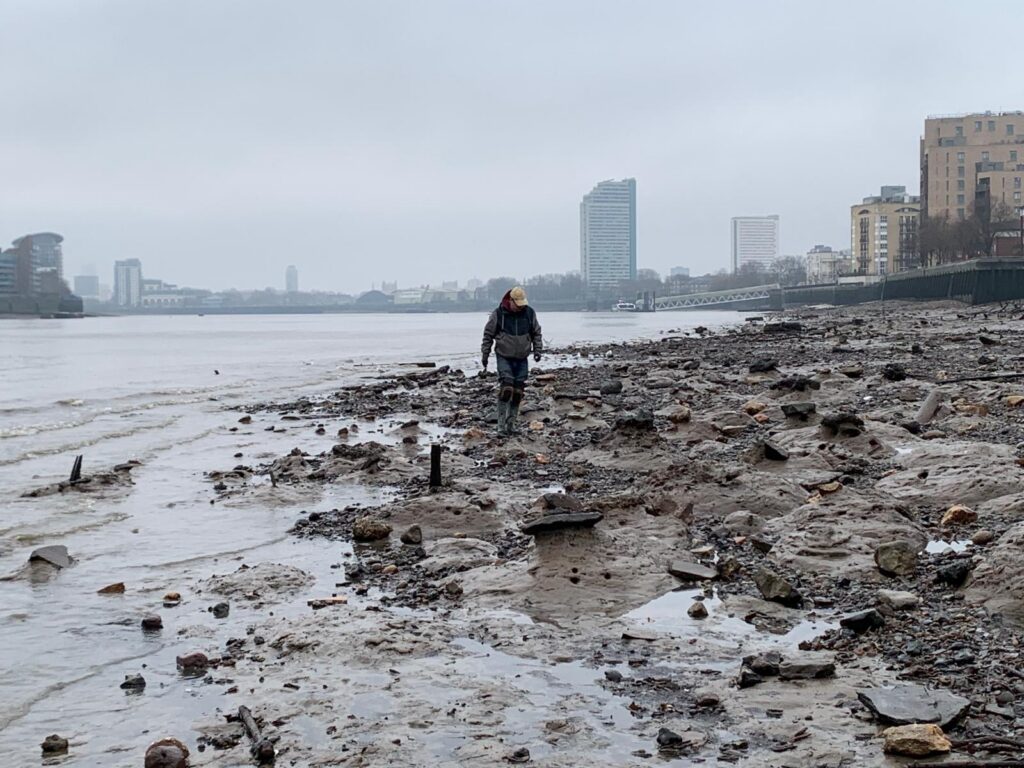
Photo by Jason Sandy
I first received a permit to search the Thames foreshore in June 2020. What began as a lockdown hobby has become a way of life and, since 2022, the focus of my postgraduate research. I live in Rotherhithe, near the river, with my two daughters.
What is its purpose?
The purpose of the collection is to create an enduring record of the things I have found on the Thames foreshore and to share the historical knowledge they reveal about London and its river in the past.
Thames mudlarks are required by the terms of their license to report finds to their local museum or heritage organisation, who then record significant objects on the Portable Antiquities Scheme (PAS) database. This is an important resource for the recording and sharing of tangible cultural heritage recovered by amateur finders. However the PAS has limited capacity and most finds are not recorded if they do not meet the criteria in terms of age or perceived significance.
This collection allows me to share a broader variety of finds than the 17 which I have had recorded on the PAS (although it is still, in its own, way a selective representation). Many of the objects that you will find on this website are mundane traces of the social and working lives of Londoners in the past. A great number are broken or damaged. And some of them are very recent deposits – the archaeology of the future.
How is the collection organised?
Entries are organised by object type, period, material and find spot. In most cases I follow PAS category definitions, although at present only key data, when known, are included.
Many entries include references to similar objects recorded on the PAS or elsewhere. Where relevant I also include personal or contextual information about the object or its discovery.
A note on locations
Although many objects recovered from the Thames foreshore are found out of context in unstratified deposits, the location of a find remains a key part of the historical information it contains. For this reason I have included a broad location for each entry, although at present I have decided not to share precise findspots.
Identification and dating of objects
I endeavour to provide accurate identification of objects, their material(s) and broad dating. Where I am not sure, I say so.
I welcome feedback and interaction so if you have additional information about an entry, or notice an error, please leave a comment.